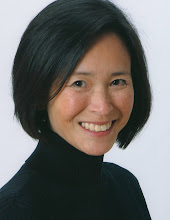
Here is our first international pearl:
Whenever we were too tired, cranky, or whining about minor things in our life, my grandmother, an Argentinian, would say with a smile:
"Al mal tiempo, buena cara" (in bad times, good faces)
to remind us that:
1. Bad times COME & GO
2. More important: bad times ARE NO EXCUSE to be impolite or grumpy.
Friday, July 2, 2010


Sunday, June 6, 2010
The Value of Setbacks
Dr. Robert Brooks is on the faculty of Harvard Medical School, and is a highly respected author, lecturer, and psychologist. He is also the proud grandfather of four. Dr. Brooks writes monthly articles for his website: www.drrobertbrooks.com. In his September 2009 article, he wrote a message to his four grandchildren. There were many pearls in that article, and I'm pleased to share one of them with you:
"Appreciate that setbacks are a natural part of one’s journey in life. Years ago when I first began to write about the concept of self-esteem, I emphasized a couple of points, especially in response to some well-intentioned people who possessed misguided thoughts that boosting the self-esteem of children involved protecting them from failure and placing them on a pedestal. First, I advanced the belief that genuine self-esteem is predicated on realistic accomplishment and the unconditional love displayed by significant others; I argued that children were wise enough to know when they were given false praise or when love was conditional. The second point I highlighted was that during our lives we all experience mistakes or hardships or setbacks, but what is most important is the ways in which we understand and cope with such events. Resilient children are those who appreciate that setbacks can serve as a significant source of knowledge and strength for subsequent success, but only if one seeks to learn from the setback and consider alternative approaches in the future.
I have become increasingly concerned with the number of children who view setbacks as unalterable and who entertain little hope or optimism for future success. Believing they cannot learn from mistakes they recruit coping strategies that serve only to exacerbate the situation. They do not confront the challenge but instead they may quit or make excuses for their difficulties, sometimes casting the blame on others. Or, they may blame themselves as one of my teenage patients did when he described himself as having a “personality flaw.” The adults in the lives of children must insure that they model and convey the message that setbacks are to be expected and can serve as opportunities for emotional growth.
I thought of this message listening to the very eloquent, moving eulogy offered by Senator Kennedy’s oldest son, Ted Kennedy, Jr. who observed:
When I was 12 years old I was diagnosed with bone cancer, and a few months after I lost my leg there was a heavy snowfall over my childhood home outside of Washington, D.C. My father went to the garage to get the old Flexible Flyer and asked me if I wanted to go sledding down the steep driveway. . . . I slipped and fell on the ice and started to cry and I said, “I can’t do this.” I said, “I’ll never be able to climb that hill.” And he lifted me up in his strong, gentle arms and said something I’ll never forget. He said, “I know you can do it; there is nothing you can’t do. We’re going to climb that hill together, even if it takes all day.” As I climbed on his back and we flew down the hill that day, I knew he was right. I knew I was going to be okay. You see, my father taught me that even our most profound losses are survivable. And it is what we do with that loss, our ability to transform it into a positive event, that is one of my father’s greatest lessons.
What an incredible, life-transforming lesson Senator Kennedy taught his son, not only about overcoming obstacles but literally and figuratively drawing upon the strength of an adult to conquer one’s fears and doubts and establish a more hopeful, resilient outlook."
"Appreciate that setbacks are a natural part of one’s journey in life. Years ago when I first began to write about the concept of self-esteem, I emphasized a couple of points, especially in response to some well-intentioned people who possessed misguided thoughts that boosting the self-esteem of children involved protecting them from failure and placing them on a pedestal. First, I advanced the belief that genuine self-esteem is predicated on realistic accomplishment and the unconditional love displayed by significant others; I argued that children were wise enough to know when they were given false praise or when love was conditional. The second point I highlighted was that during our lives we all experience mistakes or hardships or setbacks, but what is most important is the ways in which we understand and cope with such events. Resilient children are those who appreciate that setbacks can serve as a significant source of knowledge and strength for subsequent success, but only if one seeks to learn from the setback and consider alternative approaches in the future.
I have become increasingly concerned with the number of children who view setbacks as unalterable and who entertain little hope or optimism for future success. Believing they cannot learn from mistakes they recruit coping strategies that serve only to exacerbate the situation. They do not confront the challenge but instead they may quit or make excuses for their difficulties, sometimes casting the blame on others. Or, they may blame themselves as one of my teenage patients did when he described himself as having a “personality flaw.” The adults in the lives of children must insure that they model and convey the message that setbacks are to be expected and can serve as opportunities for emotional growth.
I thought of this message listening to the very eloquent, moving eulogy offered by Senator Kennedy’s oldest son, Ted Kennedy, Jr. who observed:
When I was 12 years old I was diagnosed with bone cancer, and a few months after I lost my leg there was a heavy snowfall over my childhood home outside of Washington, D.C. My father went to the garage to get the old Flexible Flyer and asked me if I wanted to go sledding down the steep driveway. . . . I slipped and fell on the ice and started to cry and I said, “I can’t do this.” I said, “I’ll never be able to climb that hill.” And he lifted me up in his strong, gentle arms and said something I’ll never forget. He said, “I know you can do it; there is nothing you can’t do. We’re going to climb that hill together, even if it takes all day.” As I climbed on his back and we flew down the hill that day, I knew he was right. I knew I was going to be okay. You see, my father taught me that even our most profound losses are survivable. And it is what we do with that loss, our ability to transform it into a positive event, that is one of my father’s greatest lessons.
What an incredible, life-transforming lesson Senator Kennedy taught his son, not only about overcoming obstacles but literally and figuratively drawing upon the strength of an adult to conquer one’s fears and doubts and establish a more hopeful, resilient outlook."
Saturday, June 5, 2010
The Passing of a Legend
News has broken that John Wooden, the legendary basketball coach of UCLA, has just passed away at the age of 99. I am honored to say that Coach Wooden was the first official contributor to "Grandma's Pearls" (January 19, 2007). He was college basketball's most successful coach (10 national championships during a 12-season stretch), yet he was most respected by his players as a wise, scholarly, and humble man. Coach Wooden has imparted his life lessons to younger generations through his many books and speeches. His famous "Pyramid of Success" has been the foundation of his teachings. Last night's New York Times article stated that he always carried a piece of paper with a message from his father:
“Be true to yourself. Make each day a masterpiece. Help others. Drink deeply from good books. Make friendship a fine art. Build a shelter against a rainy day.”
Kareem Abdul-Jabbar wrote in the New York Times in 2000, “To lead the way Coach Wooden led takes a tremendous amount of faith. He was almost mystical in his approach, yet that approach only strengthened our confidence. Coach Wooden enjoyed winning, but he did not put winning above everything. He was more concerned that we became successful as human beings, that we earned our degrees, that we learned to make the right choices as adults and as parents.
“In essence,” Abdul-Jabbar said, “he was preparing us for life.”
“Be true to yourself. Make each day a masterpiece. Help others. Drink deeply from good books. Make friendship a fine art. Build a shelter against a rainy day.”
Kareem Abdul-Jabbar wrote in the New York Times in 2000, “To lead the way Coach Wooden led takes a tremendous amount of faith. He was almost mystical in his approach, yet that approach only strengthened our confidence. Coach Wooden enjoyed winning, but he did not put winning above everything. He was more concerned that we became successful as human beings, that we earned our degrees, that we learned to make the right choices as adults and as parents.
“In essence,” Abdul-Jabbar said, “he was preparing us for life.”
Wednesday, May 26, 2010
New England Independence
Pansy is the epitome of New England warmth and pride. She has eyes that sparkle, a charming sense of humor, an infectious laugh, and a smile that can instantly light up a room. Upon first meeting her, you feel as though you've known her for years. At the age of 91, she holds her head high and never complains about her health, or the harsh Boston winters.
Pansy gave birth to four boys in the 1940's and 50's. As the mother of four boys, you can only imagine all the testosterone in the air, and it was necessary that she run a tight ship. Unfortunately though, Pansy had occasional bouts of migraine headaches that would keep her from performing her duties as commander-in-chief. As a result, she had to teach her boys how to take care of themselves. They learned to cook, clean, make lunches, and get themselves to school in the morning. Certainly not typical of boys raised during that time. They have all grown into responsible men, able to handle almost anything life presents them. Pansy taught them very well. A word of advice to parents though: "I did encourage my boys to be independent, but today there is a fine line between independence and safety. Parents have a much more difficult job in today's world."
Pansy gave birth to four boys in the 1940's and 50's. As the mother of four boys, you can only imagine all the testosterone in the air, and it was necessary that she run a tight ship. Unfortunately though, Pansy had occasional bouts of migraine headaches that would keep her from performing her duties as commander-in-chief. As a result, she had to teach her boys how to take care of themselves. They learned to cook, clean, make lunches, and get themselves to school in the morning. Certainly not typical of boys raised during that time. They have all grown into responsible men, able to handle almost anything life presents them. Pansy taught them very well. A word of advice to parents though: "I did encourage my boys to be independent, but today there is a fine line between independence and safety. Parents have a much more difficult job in today's world."
Saturday, May 22, 2010
97 Years of Wisdom
My mother-in-law will celebrate her 97th birthday this year. Upon hearing her age, people who haven't yet met her tend to jump to conclusions about her quality of life. I must say that I don't blame them. I remember days long ago when my school service group would make visits to the local senior home. Many of the residents were in wheelchairs or confined to their beds. They seemed lonely and were hungry to interact with our group of teen kids.
My mother-in-law breaks that mold. She is one of those lucky individuals who has maintained an extremely sharp and witty mind. She is blessed with a a physical strength that enables her to live on her own in a 2-story home. She cooks, cleans, gardens, and either walks or takes public transport to wherever she needs to go. She is the epitomy of independence, and typically refuses to accept much help from anyone, including her children or grandchildren. Try to treat her to dinner, and she'll knock you down fighting for the bill.
In addition to being independent, she says the key to her success is the lifeskill of Flexibility. You never know what life is going to present to you, and you have to change with the times. Too many people get stuck in their ways, and they end up frustrated and unhappy. Try a new food, a new hobby, making a new friend....take a chance, and you will learn something new in the process!
My mother-in-law breaks that mold. She is one of those lucky individuals who has maintained an extremely sharp and witty mind. She is blessed with a a physical strength that enables her to live on her own in a 2-story home. She cooks, cleans, gardens, and either walks or takes public transport to wherever she needs to go. She is the epitomy of independence, and typically refuses to accept much help from anyone, including her children or grandchildren. Try to treat her to dinner, and she'll knock you down fighting for the bill.
In addition to being independent, she says the key to her success is the lifeskill of Flexibility. You never know what life is going to present to you, and you have to change with the times. Too many people get stuck in their ways, and they end up frustrated and unhappy. Try a new food, a new hobby, making a new friend....take a chance, and you will learn something new in the process!
Thursday, November 27, 2008
Making Memories
Here's a wonderful Thanksgiving pearl from Marilyn Lane. Ms. Lane is the co-author of "Parenting With Purpose: Five Keys to Raising Children with Values and Vision."
I remember one Thanksgiving when I was a principal at an elementary school in the Bay Area in California. I was very busy with both my job and my efforts to provide Thanksgiving dinners for some of our school's families. My daughter, who was a single mom, was traveling to my house for Thanksgiving along with her daughter Sarah who was about three or four.
I had almost decided to buy Thanksgiving dinner from one of the supermarkets that provide complete dinners for a price, when I received a call from Sarah. In her usual enthusiastic voice, Sarah said, "OH Grandma, Grandma. I can hardly wait until we get to your house! We can find beautiful leaves to decorate the table like we did last year, and I can help you make the pies and......." and then I knew I had to make Thanksgiving dinner, and include Sarah and her mom in the making. I wasn't just making a dinner; I was making a memory that would last forever. I was providing a tradition and a feeling of continuity and belonging for my family.
Sarah is in college now, and she still helps me make pies. Last year she made two aprons for me for my birthday. On the front, with liquid embroidery, she had written "Grandma" on one and "Sarah" on the other. They both hang in the pantry so we can use them whenever we make pies together.
I remember one Thanksgiving when I was a principal at an elementary school in the Bay Area in California. I was very busy with both my job and my efforts to provide Thanksgiving dinners for some of our school's families. My daughter, who was a single mom, was traveling to my house for Thanksgiving along with her daughter Sarah who was about three or four.
I had almost decided to buy Thanksgiving dinner from one of the supermarkets that provide complete dinners for a price, when I received a call from Sarah. In her usual enthusiastic voice, Sarah said, "OH Grandma, Grandma. I can hardly wait until we get to your house! We can find beautiful leaves to decorate the table like we did last year, and I can help you make the pies and......." and then I knew I had to make Thanksgiving dinner, and include Sarah and her mom in the making. I wasn't just making a dinner; I was making a memory that would last forever. I was providing a tradition and a feeling of continuity and belonging for my family.
Sarah is in college now, and she still helps me make pies. Last year she made two aprons for me for my birthday. On the front, with liquid embroidery, she had written "Grandma" on one and "Sarah" on the other. They both hang in the pantry so we can use them whenever we make pies together.
Sunday, October 26, 2008
20 Things Children Truly Need for School
It's been just over a year since I last posted, and we are well over two months into the school year. Unbelievable. Having two school-aged kids will do that to you I suppose...the years just start to speed up, and before you know it, the kids are taller and smarter than you ever imagined.
The following article was printed in the Evansville Courier and Press, and forwarded to me by a dear friend. It's chock full of pearls, so I contacted the author and asked her permission to post this. I hope you enjoy this as much as I did.
Here are the 20 things kids really need to start school...
SHARON RANDALL, Scripps Howard
Sunday, August 31, 2008
A friend e-mailed me a story she couldn't wait to tell me. She'd gone out to fetch the newspaper when she saw two little girls — ages 5 and 7, she guessed — all dressed up for the first day of school. And their dad was snapping their picture.
"It caused me to reflect on when my kids started school," she wrote. "That first day was a mixed bag, because if you were a mom with the kids in the house all summer, you were looking forward to some peace and quiet. But in the same vein, it was another year gone. ..."
Reading her note, I suddenly realized I never made pictures of my kids on their first day of school. What was I thinking?
Wait. I remember. I was thinking, "Please, God, help me get them in the car because my oldest can't find his shoes, and my youngest threw up, and my daughter hates how I braided her hair. And if we don't leave now we're going to be late because I might kill them. And, God? Please let the car start."
Motherhood is indeed a "mixed bag," not just on the first day of school.
From the day they are born, we start pushing them out of the nest with one hand and pulling them back with the other.
I don't have pictures of my children on their first days of school, but I have memories. I wish you could see them.
Last year in a column, I listed what I think children need for school. Many of you requested a reprint of that list. So here again, thank you, are "20 things children truly need for school."
1. A No. 2 pencil and a willingness to erase.
2. A respect for themselves and others, especially their teachers.
3. An awareness that the world does not revolve around them, and that they alone are responsible for their actions.
4. Parents (or grandparents) who teach by example a love for reading, learning and life.
5. An assurance that school is a good, safe place, their teachers will like them, and their parents won't leave town without them.
6. An understanding that school is their "job" and no one else can or will do it for them.
7. A system for exchanging communication between school and home; a backpack for notes; an emergency phone number that always answers; a quiet place and time to do homework; a daily chance to read aloud and to be read to.
8. A plan for getting to and from school on time.
9. A pet to care for.
10. A public library card.
11. Someone to welcome them home, laugh at their jokes, answer their questions and listen to what they say and don't say.
12. The power of knowing how it feels to give anonymously and sacrificially to help someone less fortunate.
13. The encouragement to try new things, the freedom to fail and the chance to try again.
14. The gifts of being well- fed, well-rested, well-mannered and well-covered for medical, dental and after-school care.
15. The confidence to deal with bullies (stand up straight, look them in the eye, don't start a fight — but don't back down), how to ask questions (raise your hand and wait to be called on) and to never stop asking questions, especially "Why?"
16. To be the best, or at least pretty good, at something, and to know that it's OK not to be good at everything.
17. To spend more time with humans and less with machines.
18. To have nothing to do once in a while but daydream.
19. To have someone love them unconditionally, regardless of their grades; someone to "beam" at them, to light up when they walk into the room.
20. They need to know that school won't last forever, but learning is a lifelong process.
And even if their mom forgets to take pictures, she'll always think they look pretty cute.
Sharon Randall can be contacted at P.O. Box 777394, Henderson, NV 89077, or at www.sharonrandall.com.
The following article was printed in the Evansville Courier and Press, and forwarded to me by a dear friend. It's chock full of pearls, so I contacted the author and asked her permission to post this. I hope you enjoy this as much as I did.
Here are the 20 things kids really need to start school...
SHARON RANDALL, Scripps Howard
Sunday, August 31, 2008
A friend e-mailed me a story she couldn't wait to tell me. She'd gone out to fetch the newspaper when she saw two little girls — ages 5 and 7, she guessed — all dressed up for the first day of school. And their dad was snapping their picture.
"It caused me to reflect on when my kids started school," she wrote. "That first day was a mixed bag, because if you were a mom with the kids in the house all summer, you were looking forward to some peace and quiet. But in the same vein, it was another year gone. ..."
Reading her note, I suddenly realized I never made pictures of my kids on their first day of school. What was I thinking?
Wait. I remember. I was thinking, "Please, God, help me get them in the car because my oldest can't find his shoes, and my youngest threw up, and my daughter hates how I braided her hair. And if we don't leave now we're going to be late because I might kill them. And, God? Please let the car start."
Motherhood is indeed a "mixed bag," not just on the first day of school.
From the day they are born, we start pushing them out of the nest with one hand and pulling them back with the other.
I don't have pictures of my children on their first days of school, but I have memories. I wish you could see them.
Last year in a column, I listed what I think children need for school. Many of you requested a reprint of that list. So here again, thank you, are "20 things children truly need for school."
1. A No. 2 pencil and a willingness to erase.
2. A respect for themselves and others, especially their teachers.
3. An awareness that the world does not revolve around them, and that they alone are responsible for their actions.
4. Parents (or grandparents) who teach by example a love for reading, learning and life.
5. An assurance that school is a good, safe place, their teachers will like them, and their parents won't leave town without them.
6. An understanding that school is their "job" and no one else can or will do it for them.
7. A system for exchanging communication between school and home; a backpack for notes; an emergency phone number that always answers; a quiet place and time to do homework; a daily chance to read aloud and to be read to.
8. A plan for getting to and from school on time.
9. A pet to care for.
10. A public library card.
11. Someone to welcome them home, laugh at their jokes, answer their questions and listen to what they say and don't say.
12. The power of knowing how it feels to give anonymously and sacrificially to help someone less fortunate.
13. The encouragement to try new things, the freedom to fail and the chance to try again.
14. The gifts of being well- fed, well-rested, well-mannered and well-covered for medical, dental and after-school care.
15. The confidence to deal with bullies (stand up straight, look them in the eye, don't start a fight — but don't back down), how to ask questions (raise your hand and wait to be called on) and to never stop asking questions, especially "Why?"
16. To be the best, or at least pretty good, at something, and to know that it's OK not to be good at everything.
17. To spend more time with humans and less with machines.
18. To have nothing to do once in a while but daydream.
19. To have someone love them unconditionally, regardless of their grades; someone to "beam" at them, to light up when they walk into the room.
20. They need to know that school won't last forever, but learning is a lifelong process.
And even if their mom forgets to take pictures, she'll always think they look pretty cute.
Sharon Randall can be contacted at P.O. Box 777394, Henderson, NV 89077, or at www.sharonrandall.com.
Subscribe to:
Posts (Atom)